
Usable Torque
Stronger and more progressive torque delivery through the areas of the rev range used during everyday driving, overtaking and towing.
More usable torque, improved throttle response and better transmission behaviour for the 4.5L twin-turbo diesel LandCruiser 200 Series. Engine and transmission tuning are included together as one complete driveline package.
Tuned and tested by appointment at our Donnybrook workshop, servicing Bunbury and South West WA.
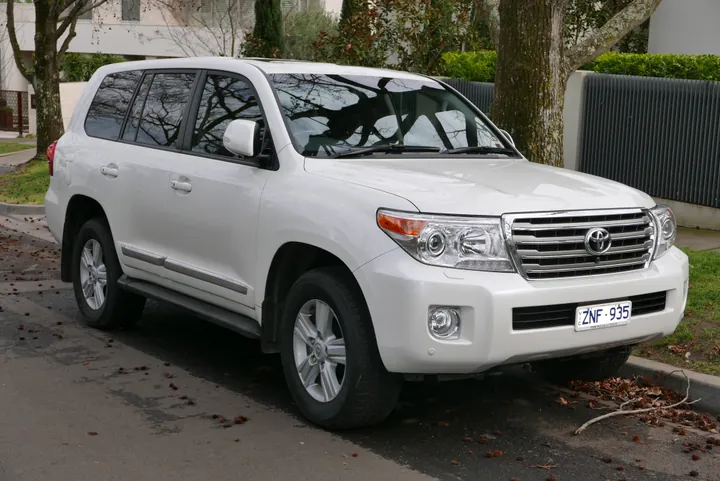
For standard and mildly modified Toyota LandCruiser 200 Series vehicles. Exact vehicle condition, controller support and modifications are confirmed before booking.
On the 200 Series, we treat engine and transmission tuning as one package rather than two separate upgrades.
The 1VD-FTV engine and automatic transmission work together through torque management, shift scheduling and converter strategy. Improving engine output without considering how the transmission responds leaves much of the potential drivability improvement on the table.
Our complete 200 Series package includes both ECU and transmission calibration. From $1,320 inc GST.
The aim is not simply a larger peak-power figure. The calibration is focused on useful torque, predictable throttle response and transmission behaviour that better suits everyday driving, touring and towing.
Each part of the driveline calibration is considered as part of the way the complete vehicle behaves.
Stronger and more progressive torque delivery through the areas of the rev range used during everyday driving, overtaking and towing.
More direct and predictable response without making the vehicle unnecessarily aggressive during normal driving.
Revised transmission mapping improves shift points and makes better use of the available engine torque.
Improved torque-converter lock-up behaviour reduces unnecessary converter slip and helps the driveline feel more positively connected where operating conditions allow.
Better coordination between engine torque, shift points and converter behaviour can make the vehicle more settled and predictable when towing or travelling under sustained load.
The factory six-speed 200 Series transmission strategy is conservative about selecting sixth gear and typically delays normal sixth-gear engagement until approximately 120 km/h.
Our transmission calibration can revise this strategy so sixth gear becomes available from approximately 100 km/h under suitable driving conditions.
This does not mean forcing the transmission into sixth gear regardless of load. Gear selection still responds appropriately to throttle position, vehicle speed, engine load and driving conditions.
The aim is to make sixth gear genuinely useful at normal Australian highway speeds while retaining appropriate downshift behaviour when additional torque is required.
This can be particularly noticeable during highway touring where the standard strategy can otherwise leave the vehicle unnecessarily holding fifth gear.
Transmission tuning also allows us to improve the factory torque-converter lock-up strategy.
Earlier and more appropriate lock-up can reduce unnecessary converter slip and make the driveline feel more direct, particularly during steady-speed cruising and moderate-load operation.
However, software calibration and a dedicated torque-converter lock-up kit are not the same thing.
The transmission tune improves how the factory transmission and converter are commanded within their normal mechanical and hydraulic capabilities. A dedicated lock-up kit can provide additional converter control beyond what calibration alone can achieve.
For owners who tow regularly or specifically want greater control over converter lock-up, a quality lock-up kit can still be a worthwhile addition after tuning.
A 200 Series towing a caravan, boat or trailer spends far more time operating through the middle of the engine’s usable range than it does producing a headline peak-power number.
For towing applications, SWTC focuses on how the complete driveline behaves:
The goal is a 200 Series that feels stronger and more settled without simply commanding unnecessary torque everywhere. Tuning does not alter the vehicle’s legal towing limits.

Many 200 Series owners fit supporting modifications such as upgraded airboxes and intake systems, exhaust systems, intercoolers, turbochargers or fuel-system components.
These modifications are not required to achieve a worthwhile result from a standard 200 Series.
However, where a vehicle has already been modified, the calibration can be reviewed and developed around the actual hardware rather than treating the vehicle as completely standard.
More extensively modified combinations may require additional assessment, logging or calibration work depending on the setup.
Let SWTC know what has already been changed when enquiring so we can determine whether the standard package is suitable or whether the vehicle requires a more involved calibration approach.
SWTC does not treat tuning as simply loading a file and handing the keys back.
DynoBox is a GPS-based road performance measurement system, not a conventional roller or chassis dynamometer. The checks used depend on the individual vehicle and application; not every possible test or measurement is performed on every vehicle.
A calibration should suit the actual vehicle and how it is used. When enquiring, please provide:
Vehicles with significant modifications or existing mechanical issues may require additional assessment before tuning.
From $1,320 inc GST
ECU + transmission tuning included
On the LandCruiser 200 Series, engine and transmission tuning are included together as part of the complete driveline calibration rather than being priced as unrelated upgrades.
Pricing applies to normal supported vehicles without unresolved mechanical, electrical or programming faults. More extensively modified vehicles or additional diagnostic work may require separate assessment.
Yes. From $1,320 inc GST, the 200 Series package includes both ECU and transmission tuning. SWTC treats the engine and transmission as a complete driveline rather than charging for them as unrelated upgrades.
On applicable six-speed 200 Series vehicles, the factory strategy generally delays normal sixth-gear engagement until approximately 120 km/h. The revised transmission strategy can make sixth gear available from approximately 100 km/h under suitable load and driving conditions, making it more useful at normal highway speeds.
Yes. Transmission calibration can improve converter lock-up strategy and reduce unnecessary slip where appropriate.
Yes, potentially. The transmission tune and a lock-up kit perform related but different functions. Calibration improves how the factory transmission commands converter operation, while a dedicated lock-up kit can provide additional converter control. Owners who tow regularly may still benefit from fitting a quality lock-up kit after tuning.
Yes. Towing is one of the primary reasons owners choose to improve the 200 Series driveline calibration. The focus is useful torque, sensible transmission behaviour and predictable delivery rather than simply chasing a peak power number.
No, nor should it. The transmission still needs to select a lower gear when speed, throttle demand or load requires it. The aim is more appropriate gear selection, not eliminating necessary downshifts.
Potentially. Age and kilometres alone do not determine suitability, but mechanical condition matters. Vehicles exhibiting faults or abnormal engine or transmission behaviour may need those issues addressed before tuning.
Let SWTC know what has been changed. Standard and mildly modified vehicles can generally be assessed and calibrated accordingly, while more extensively modified combinations may require additional calibration work or assessment.
Some owners may see an improvement under particular conditions, but fuel consumption depends heavily on vehicle weight, tyres, modifications, towing load, speed and driving style. A specific economy improvement cannot be promised.
In most cases, yes. We normally retain or obtain the appropriate original software so the ECU can be returned to its standard calibration where supported. Returning the software to standard does not necessarily erase programming records or guarantee that previous calibration changes cannot be identified.
Many standard jobs can be completed within the same day. Timing depends on the vehicle, ECU access method, initial checks, data logging and whether calibration revisions are required. Some ECUs require bench access rather than programming through the diagnostic port, which can add time.
Send the model year, kilometres, current modifications, tyre size, towing requirements, existing lock-up or transmission modifications, known faults and what you would like improved.
South West Tuning Co. · Donnybrook, Western Australia · By appointment